


Managing roof replacement with solar panels is one of the most coordination-intensive home improvement projects a homeowner can take on, and it is one where poor sequencing consistently leads to costs that were entirely avoidable. Solar panels that go on a roof without a prior condition assessment become a liability the moment that roof needs replacing. And a roof replacement scheduled without accounting for the solar system above it produces a detach-and-reset bill that most homeowners never anticipated when they originally went solar. Done correctly, the two projects reinforce each other. Done in the wrong order or by disconnected contractors, they compound in cost and complexity. If you want to understand Spartan’s approach to combined roofing and solar projects before your first conversation, that context is worth having first.
This blog covers:
- Why sequencing matters more than most homeowners realize
- The 7 steps to coordinate a roof replacement with existing or planned solar
- What detach-and-reset actually costs and how to avoid it
- How Spartan handles both under one project in Northern California
We’re proud to serve homeowners in Rancho Cordova, CA, and nearby communities with roofing and solar services and more.
Why Sequencing Roof and Solar Projects Matters
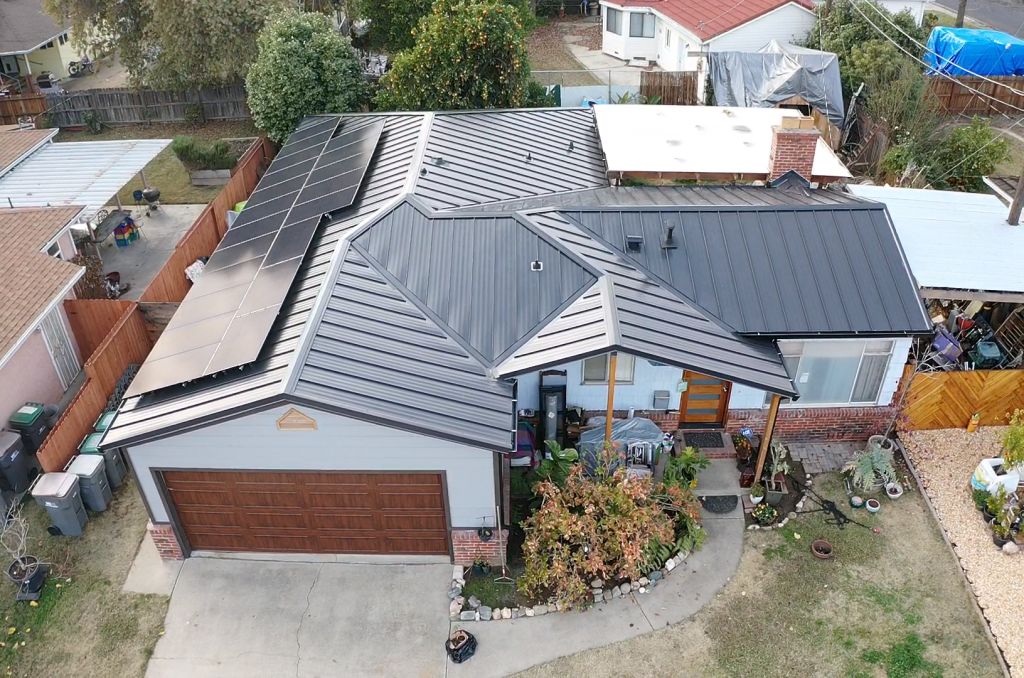
The most common and most expensive mistake in combined roofing and solar projects is installing solar panels on a roof that has fewer remaining useful years than the panels are rated for. Solar panels are rated for 25 to 30 years. A roof with 8 years of life remaining at the time of panel installation guarantees a detach-and-reset project before the panels reach half their rated life. According to Today’s Homeowner, the cost to remove and reinstall solar panels during a roof replacement typically ranges from $2,800 to $4,800 for an average-sized system of 14 to 16 panels. That cost is almost always the homeowner’s responsibility, rarely covered by either the roofing or solar warranty, and entirely avoidable with proper upfront planning.
The 7 steps below apply whether you already have solar panels on an aging roof, are planning a roof replacement before a new solar installation, or are evaluating both projects simultaneously for the first time.
7 Steps to Coordinate Roof Replacement With Solar Panels
The steps below apply whether you already have panels on an aging roof, are planning to add solar to a home that needs a new roof first, or are starting both projects from scratch. The sequence matters as much as the individual decisions.
1. Assess the Roof Before Any Solar Discussion Begins
Every combined project starts with an honest roof assessment, and that assessment needs to happen before any solar conversation. A solar company’s pre-installation check is not a substitute for a roofing inspection. Solar companies evaluate structural load capacity and orientation, not shingle age, granule loss, underlayment condition, or flashing integrity.
Get a dedicated roof inspection from a licensed roofing contractor before engaging any solar installer. The inspection should produce a documented assessment of the roof’s age, current condition, estimated remaining useful life, and any repairs needed before panel mounting. That document becomes the foundation for every decision that follows.
- What to get: A written inspection report covering shingle condition, underlayment, flashing, decking, and estimated remaining service life.
- Red flag: A solar company that completes a “roof assessment” via satellite imagery and proceeds without a physical inspection by a licensed roofer.
2. Determine Whether to Replace the Roof Before, During, or After Solar Installation
The inspection result drives this decision. If the roof has fewer than 7 to 10 years of useful life remaining, replacing it before or simultaneously with the solar installation is almost always the financially correct decision. If the roof has 15 or more years remaining, solar installation can proceed with a documented understanding of the roof’s condition on record.
The middle zone of 7 to 15 years remaining requires honest conversation about how long the homeowner plans to stay in the home, whether the roof’s condition is uniform or deteriorating in specific areas, and what a future detach-and-reset would actually cost relative to replacing now. Spartan Home Services handles this assessment as part of every combined project evaluation.
- Replace first or simultaneously: Roofs with fewer than 7 to 10 years of remaining life.
- Proceed with solar: Roofs with 15 or more years of documented remaining life in good condition.
- Case-by-case evaluation: Roofs in the 7 to 15 year range depending on condition, homeowner timeline, and replacement cost.
3. Choose a Contractor Who Handles Both Trades
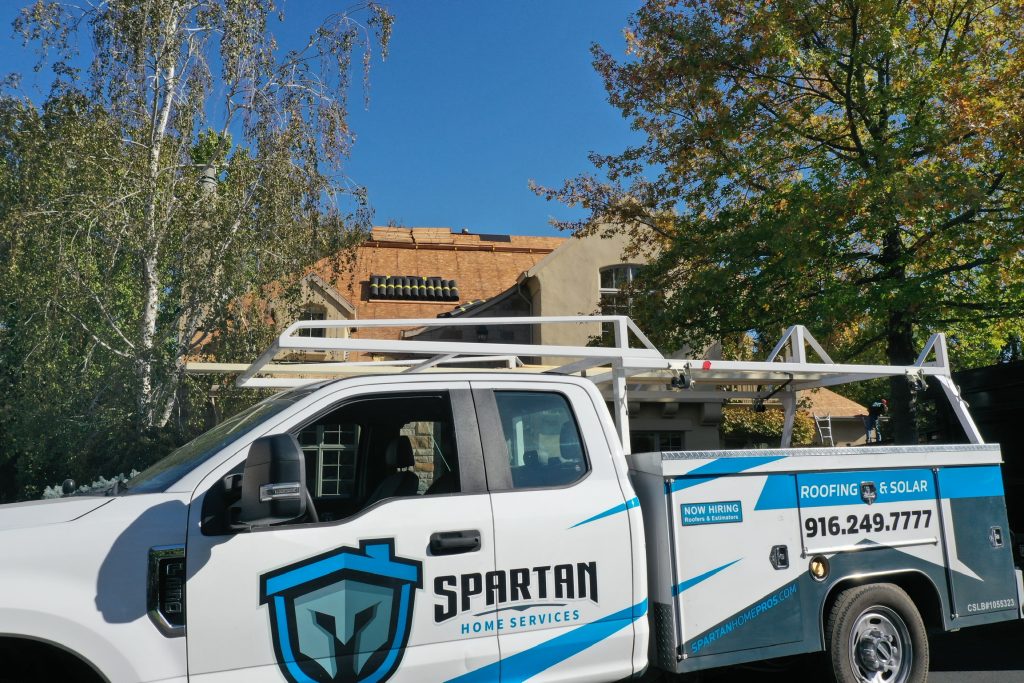
The most common source of post-installation problems in combined projects is the accountability gap between a roofing contractor and a solar installer who have no contractual relationship with each other. When a leak appears near a panel mount 18 months after installation, the roofing company points to the solar penetrations and the solar company points to the roofing membrane, and the homeowner navigates a dispute between two separate contracts.
Choosing a single contractor who handles both roofing and solar installation under one agreement eliminates that gap entirely. Spartan Home Services installs both under a single contract with a dedicated project concierge responsible for the complete scope, from roof tear-off through final panel commissioning and utility interconnection.
- Single contractor advantage: One contract, one point of accountability, one warranty conversation for penetrations and waterproofing.
- Multi-contractor risk: Disputes over post-installation leaks are the most common outcome when roofing and solar are contracted separately.
4. Confirm Title 24 Compliance for the New Roofing Material
California’s Title 24 energy code requires cool roof materials meeting minimum solar reflectance and thermal emittance thresholds for most residential roof replacements. When a roof replacement is paired with solar installation, the roofing material selection must satisfy both Title 24 requirements and the solar mounting system’s substrate compatibility.
Some roofing materials are not compatible with standard rail-based solar mounting systems. Concrete tile, for example, requires tile hooks rather than standard lag bolt penetrations, and the mounting approach affects both installation cost and roof warranty terms. Confirm material compatibility with the solar mounting system before finalizing the roofing material choice.
- Title 24: Roofing material must meet CRRC-listed reflectance and emittance thresholds on permitted work.
- Mounting compatibility: Confirm the chosen roofing material is compatible with the planned solar mounting system before material is ordered.
5. Sequence the Installation Correctly
The correct sequence for a combined project is: roof tear-off and replacement first, inspection of the new roof surface second, solar installation third. Installing solar panels before the roof is complete, or sequencing roof and solar crews simultaneously, creates waterproofing risks at penetration points that are difficult to address after panels are racked.
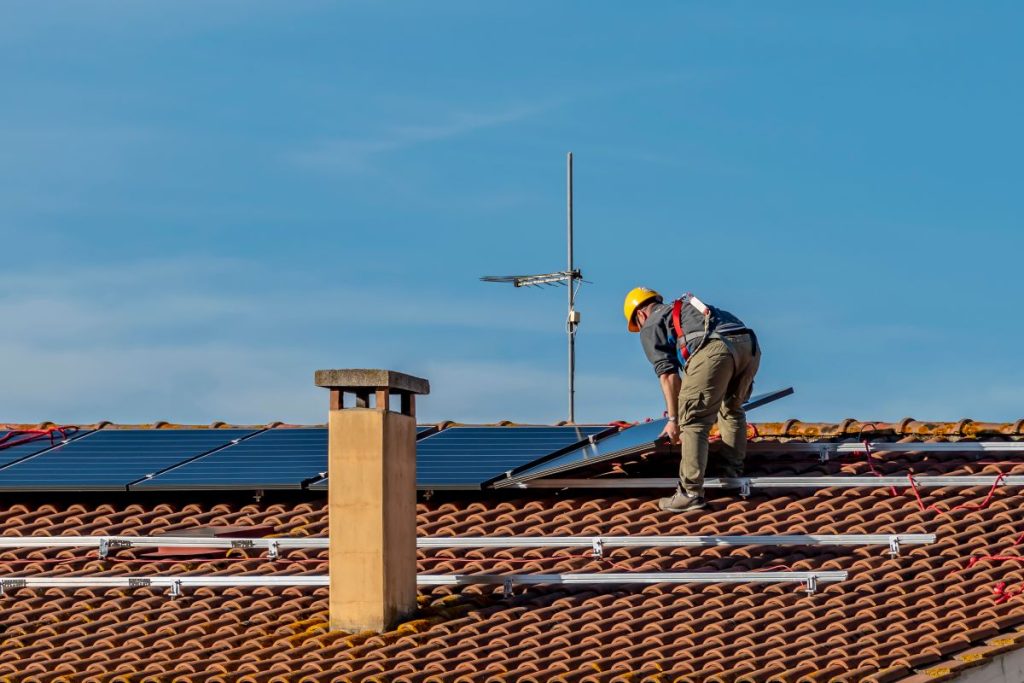
When an existing solar system is in place on a roof being replaced, the correct sequence is: solar detach, roof tear-off, new roof installation, inspection, solar reinstall. The detach and reinstall should be performed by the original solar installer or a certified solar technician familiar with the specific mounting system and inverter configuration on the home.
- New combined project: Roof first, solar second.
- Existing solar on a roof being replaced: Solar detach, roof work, solar reinstall.
- Never: Roof installation and solar rack installation simultaneously on the same surface.
6. Align Warranties Across Both Systems
A combined project produces two warranty obligations that need to be compatible: the roofing warranty covering materials and workmanship, and the solar equipment warranty covering panels, inverters, and mounting hardware. The roofing warranty’s penetration coverage is the point most likely to create conflict, since panel mounts penetrate the roofing membrane and the warranty terms for those penetrations vary by contractor.
Confirm in writing whose warranty covers a leak at a panel mount location. Confirm the roofing manufacturer’s warranty terms are not voided by the solar mounting system used. GAF’s Golden Pledge warranty, available through Spartan as a GAF Master Elite certified contractor, covers workmanship including penetrations for 25 years at No Dollar Limit, providing comprehensive protection for panel mount locations.
- Confirm in writing: Who covers a leak at a panel mount: the roofer, the solar installer, or neither.
- Golden Pledge: Spartan’s GAF Master Elite certification unlocks 25-year No Dollar Limit workmanship coverage including panel penetration points.
7. Plan Financing for the Combined Project Before Signing Either Contract
Combined roofing and solar projects are typically financed together more efficiently than separately. A single financing arrangement covering both avoids the administrative overhead of two loan applications, two approval processes, and two separate payment structures. It also gives the lender a complete picture of the project value, which can improve terms compared to financing each trade independently.
Spartan Home Services offers financing for combined roofing and solar projects with 0% interest for 12 months and terms as long as 30 years, including options for homeowners with limited or challenged credit. The commercial tax credit pathway Spartan accesses through its financing structure also passes equivalent savings to customers that most installers cannot offer since the residential Section 25D credit expired December 31, 2025.
- Combined financing: More efficient than two separate financing applications and typically produces better terms.
- Spartan’s structure: 0% for 12 months, up to 30-year terms, commercial tax credit savings passed to every customer regardless of income or credit situation.
Frequently Asked Questions About Roof Replacement With Solar Panels
These questions reflect what Northern California homeowners most often ask when facing a combined roofing and solar project for the first time.
How much does it cost to remove and reinstall solar panels for a roof replacement?
Detach-and-reset for an average residential system of 14 to 16 panels runs $2,800 to $4,800 according to verified industry data. Larger systems, complex mounting configurations, and inverter disconnection requirements push that range higher. This cost is almost always the homeowner’s responsibility and is rarely covered by roofing or solar warranties.
Can solar panels stay on during a roof replacement?
No. Panels and mounting hardware must be removed before tear-off can begin. Working around panels is not a viable option. The roof membrane under panel mounts cannot be properly inspected, replaced, or waterproofed without removing the mounting hardware entirely.
How long does a combined roof and solar project take?
A standard combined project in Northern California runs four to ten weeks from signed contract to Permission to Operate. Roof replacement itself takes one to three days. Solar installation typically takes one to two days after the new roof is in place. Permitting and utility interconnection account for the majority of the overall timeline.
Spartan Handles Both Under One Project
Coordinating a roof replacement with solar installation does not need to involve two contractors, two contracts, and an accountability gap between them. Spartan Home Services manages roofing and solar as a single project across the Sacramento and Fairfield service areas, with one concierge, one warranty conversation, and GAF Master Elite certified installation on the roofing side. Connect with our team and we will assess both systems before any work is proposed.
Recent Articles Posts
Roof Maintenance in California: Common 2026 Homeowner FAQs
Understanding roof maintenance california faq answers before a problem develops is the difference between a proactive homeowner and one making expensive emergency decisions under…
6 Most Trusted Roofing Companies in Rocklin CA
When it comes to roofing companies in Rocklin CA, Rocklin's specific housing conditions make contractor selection more consequential than homeowners in milder markets often…
7 Top Roofing Companies in Citrus Heights CA Ranked
Finding reliable roofing companies in Citrus Heights CA matters more than most homeowners expect before their first estimate call. Citrus Heights sits in Sacramento…

Make Your Home Exterior Spartan Strong!
Strong homes start with a team that does the job right.