

When it comes to replacing your roof, the shingle debate always comes back to the same question: is the upgrade actually worth it? Architectural shingles have steadily replaced 3-tab shingles as the standard across the roofing industry, and for good reason. The performance gap between the two is larger than most homeowners expect, and it shows up in lifespan, wind resistance, warranty coverage, and long-term cost. If you’re weighing your options and want to understand what a quality shingle installation actually looks like before making a decision, that’s the right place to start.
This blog covers:
- How architectural and 3-tab shingles differ in construction
- Why the performance gap matters in Northern California’s climate
- What the lifespan and warranty differences mean for your investment
- How the two shingle types compare on cost over time
- Why most roofing professionals no longer recommend 3-tab shingles
We’re proud to serve homeowners in Rocklin, CA, and nearby communities with residential roofing services and more.
What Makes These Two Shingles Different
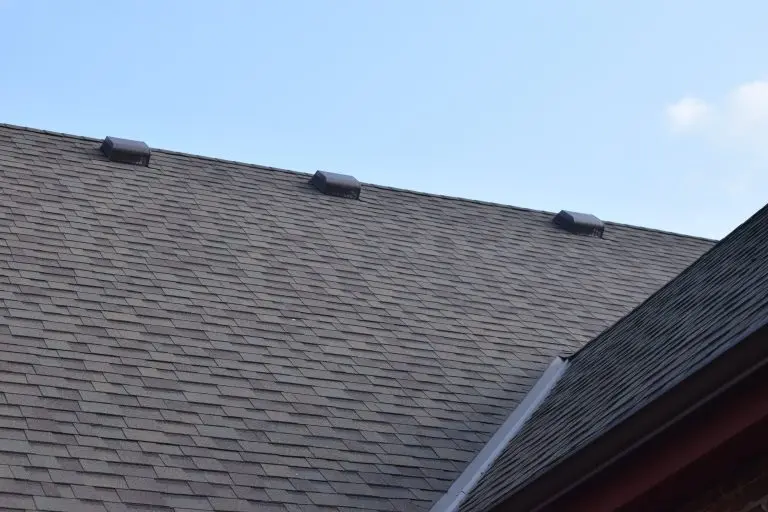
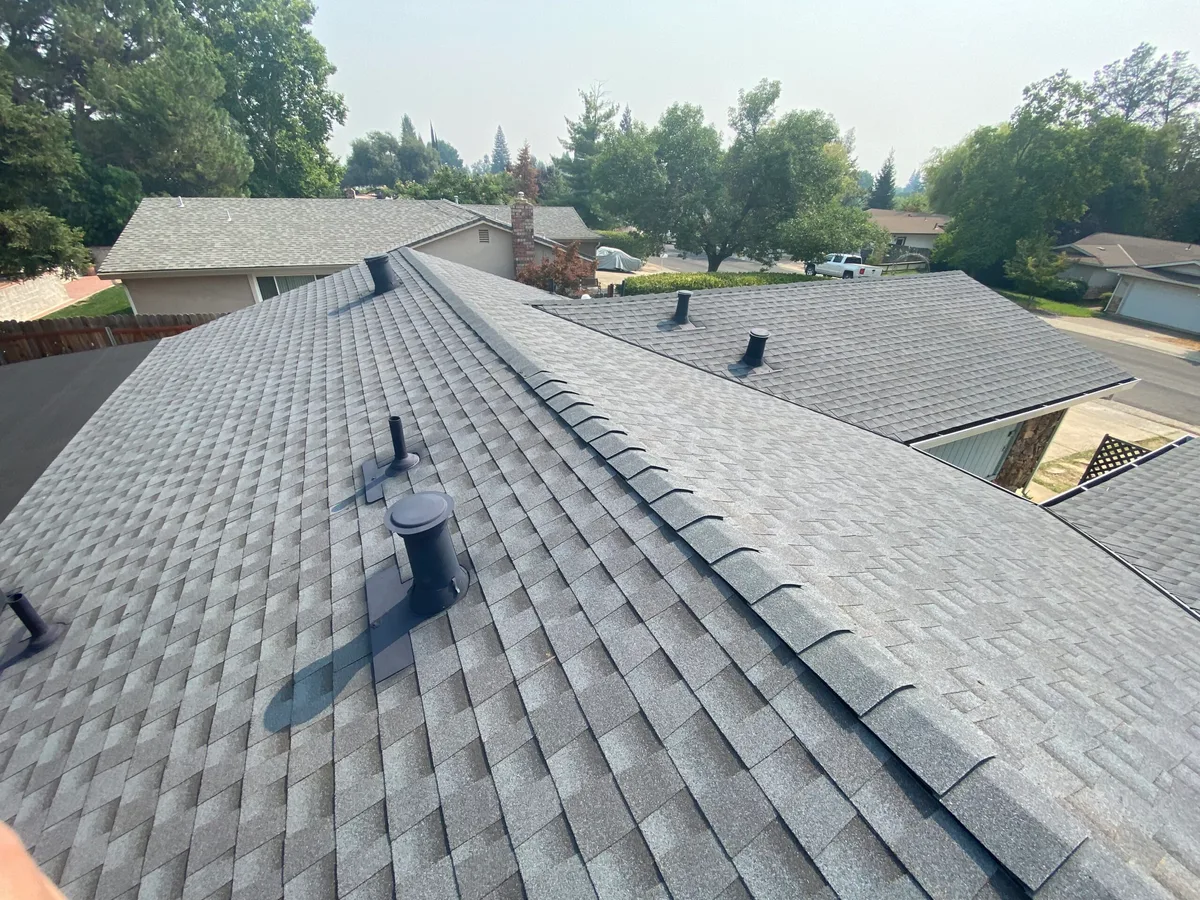
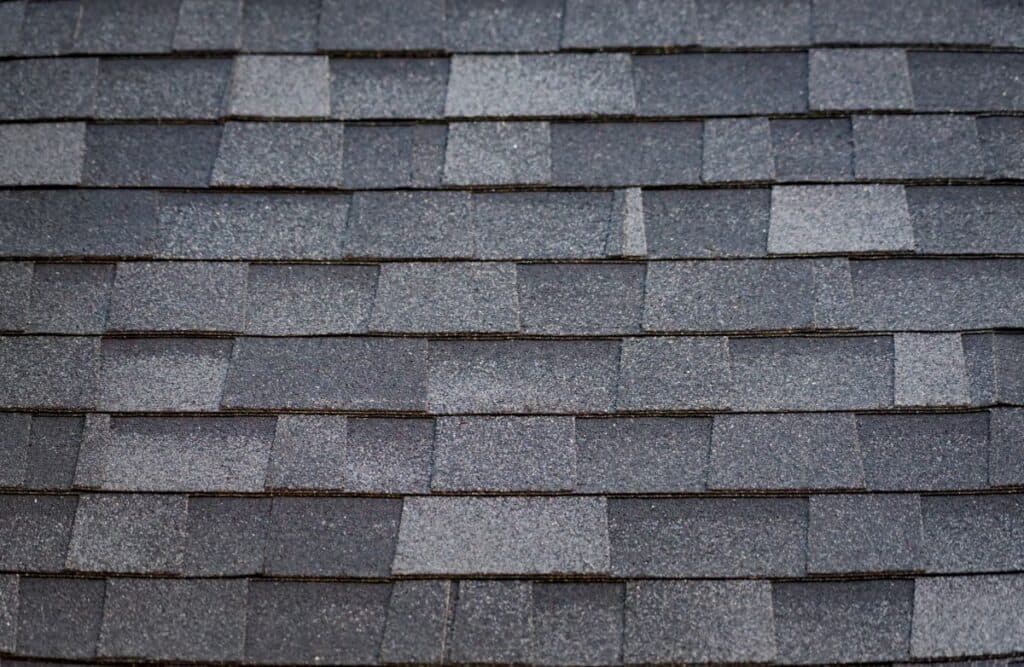
The difference between architectural and 3-tab shingles starts at the construction level and compounds from there. A 3-tab shingle is a single layer of asphalt material with three uniform cutouts along the bottom edge, creating the flat, repetitive appearance common on older homes. An architectural shingle, also called a dimensional shingle, uses two or more layers of asphalt laminated together, which adds weight, thickness, and the dimensional shadow lines that give a roof visible depth and texture.
That construction difference is the root cause of nearly every performance gap between the two products. More material means better wind resistance, better impact tolerance, slower granule loss, and a longer effective service life. The cost difference between the two products narrows significantly once you account for lifespan, and disappears almost entirely when you factor in the added maintenance and earlier replacement that 3-tab roofs typically require.
8 Reasons Architectural Shingles Beat 3-Tab Every Time
The advantages below aren’t marketing claims. They’re performance differences that show up in real-world roofing conditions, including the heat, UV exposure, and rainy season that Northern California homeowners deal with every year.
1. Significantly Longer Lifespan
Architectural shingles last 25 to 50 years depending on the product line and installation quality. Standard 3-tab shingles typically top out at 15 to 20 years under normal conditions, and that range shortens further in climates with intense heat or high UV exposure. In practical terms, a homeowner who installs 3-tab shingles today will likely need to replace their roof again before a homeowner who chose architectural shingles in the same year.
- Architectural lifespan: 25 to 50 years with proper installation and ventilation, compared to 15 to 20 years for standard 3-tab products.
- Heat sensitivity: 3-tab shingles are more vulnerable to the thermal cycling that Northern California summers produce year after year.
- Cost per year: When evaluated on a cost-per-year-of-service basis, architectural shingles almost always outperform the cheaper upfront price of 3-tab products.
2. Superior Wind Resistance
Architectural shingles are tested to withstand winds up to 110 to 130 mph, meeting ASTM D7158 Class F performance standards. In comparison, most 3-tab shingles are rated for only 60 to 70 mph. That gap translates directly to real-world performance during the wind events that occur throughout Northern California, where gusts during storm season regularly push past what a 3-tab roof is engineered to handle.
- Wind rating: Architectural shingles carry ratings of 110 to 130 mph versus 60 to 70 mph for most 3-tab products.
- Laminated construction: The bonded layers resist wind uplift at the shingle edges, where 3-tab shingles are most vulnerable to failure.
- Storm season relevance: Northern California’s rainy season frequently brings high-wind events that test roofing systems at their rated limits.
3. Better Impact Resistance
The additional material layers in architectural shingles provide meaningful protection against impact from hail, falling debris, and the granule-displacing effects of heavy rain. 3-tab shingles, with their single-layer construction, are more susceptible to impact damage that exposes the base mat underneath, which is the first step toward water infiltration and accelerated aging. Premium architectural lines, including Class 4 impact-resistant products, extend this advantage further for homeowners who want maximum protection.
- Layer advantage: Double-layer construction absorbs impact more effectively than the single-layer construction of standard 3-tab shingles.
- Granule retention: Architectural shingles maintain granule coverage better under repeated impact, preserving the UV protection those granules provide.
- Class 4 availability: Impact-resistant architectural options are widely available; equivalent protection in a 3-tab format is not.
4. Stronger Warranty Coverage
Most 3-tab shingles carry manufacturer warranties in the 20 to 25 year range with wind warranties starting around 60 to 70 mph. Architectural shingles routinely carry 30 to 50 year warranties, with lifetime limited options available at the premium tier. More importantly, the strongest manufacturer warranty programs, including GAF’s Golden Pledge, which covers both materials and workmanship, are only available with architectural shingle products installed by certified contractors. 3-tab shingles simply don’t qualify.
- Warranty length: Architectural shingles carry 30 to 50 year warranties versus 20 to 25 years for most 3-tab products.
- Workmanship coverage: Enhanced programs that cover labor as well as materials are exclusive to architectural shingle lines.
- Certification access: GAF Master Elite certification unlocks warranty tiers that are unavailable to homeowners who choose 3-tab products.
5. Greater Curb Appeal and Home Value
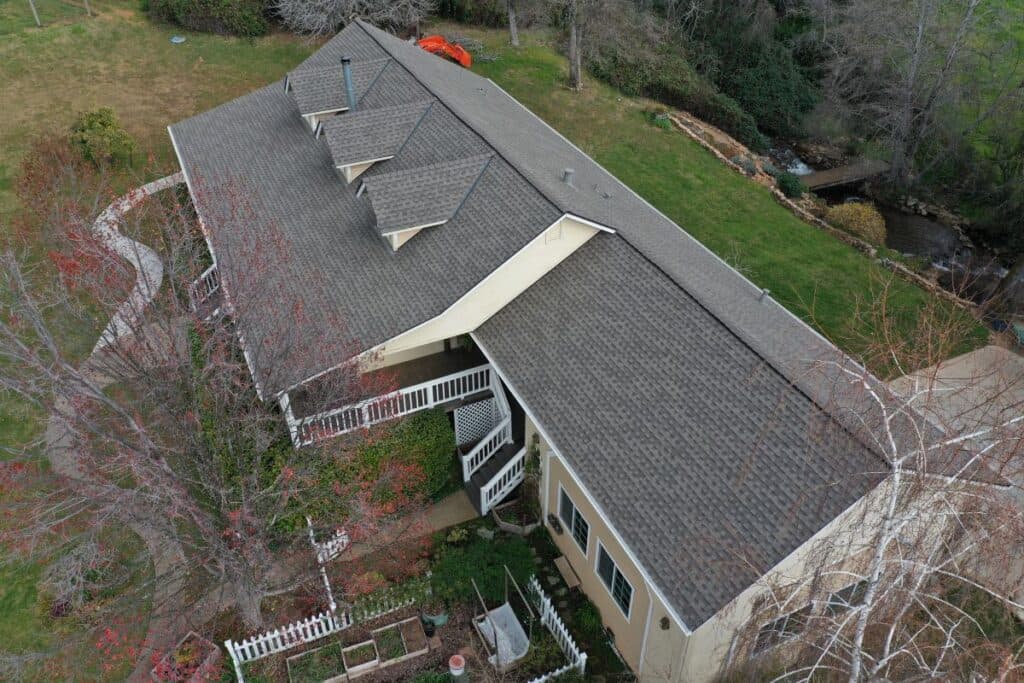
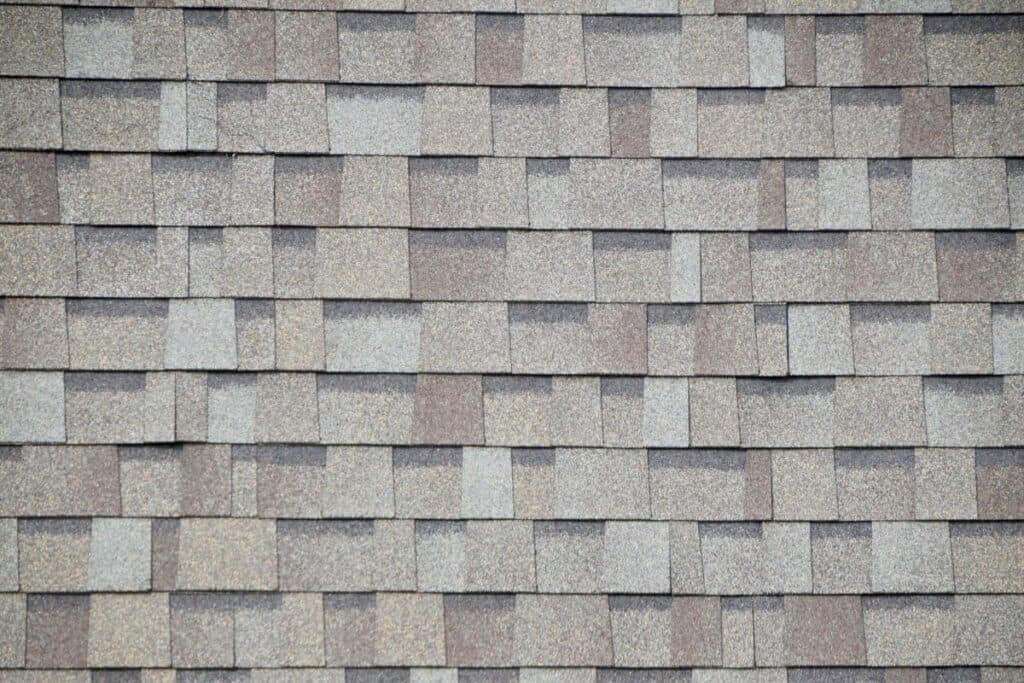
The dimensional profile of architectural shingles creates the kind of visual depth that 3-tab shingles can’t replicate. Where 3-tab shingles lay flat in a uniform, repetitive pattern, architectural shingles produce shadow lines and texture variation that make a roof look like a premium material from the street. That visual difference has a measurable impact on home value and buyer perception, particularly in competitive real estate markets where a roof upgrade can meaningfully influence offer prices and time on market.
- Dimensional profile: Multi-layer construction creates shadow lines and depth that read as a premium roofing material at street level.
- Color variety: Architectural shingles are available in a broader range of colors and styles, including products that mimic cedar shakes and slate roofing.
- Resale value: Homes with architectural shingles tend to sell faster and command stronger offers than comparable homes with aging 3-tab roofs.
6. Lower Long-Term Maintenance
The heavier construction and superior granule adhesion of architectural shingles means fewer maintenance issues over the life of the roof. Granule loss, tab lifting, and premature cracking are the most common problems with 3-tab shingles, and all three are significantly reduced in architectural products. A homeowner who installs architectural shingles is far less likely to deal with repair calls, partial replacements, or leak investigations in the years between installation and eventual full replacement.
- Granule adhesion: Architectural shingles retain granules more effectively, slowing the UV degradation that accelerates aging in both shingle types.
- Tab stability: The laminated edge construction of architectural shingles resists the lifting and cracking that generate most 3-tab repair calls.
- Maintenance frequency: Fewer repairs over the roof’s lifespan means lower total cost of ownership, not just lower replacement cost.
7. Better Performance in Northern California’s Climate
Rocklin and the broader Sacramento region experience a climate that tests roofing systems in specific ways: summer temperatures regularly exceed 100 degrees, UV exposure is intense and sustained, and a concentrated rainy season follows. Architectural shingles handle this combination better than 3-tab products across every relevant dimension. Their heavier construction resists thermal cycling, their superior granule coverage maintains UV protection through the high-heat months, and their wind resistance handles the storm season without the vulnerabilities that single-layer 3-tab construction carries.
- Heat tolerance: Heavier base mats and laminated construction resist the expansion and contraction that Northern California’s temperature swings produce.
- UV performance: Dense granule coverage maintains reflective and protective properties longer through sustained high-UV summers.
- Wind season: Wind ratings of 110 to 130 mph are well above the thresholds that compromise 3-tab performance during storm events.
8. Industry-Wide Shift Away From 3-Tab
The roofing industry has been moving away from 3-tab shingles for years, and that shift is now reflected in reduced product availability, fewer color options, and the exclusion of 3-tab products from manufacturer premium warranty programs. Many contractors no longer recommend 3-tab shingles at all except in limited situations like rental properties or budget-constrained commercial applications. Choosing 3-tab shingles today means selecting a product at the end of its industry lifecycle rather than at the beginning.
- Product availability: 3-tab shingle lines are being phased out by major manufacturers, reducing color and style options with each passing year.
- Warranty exclusion: Premium warranty programs from GAF, Owens Corning, and CertainTeed are unavailable for 3-tab installations.
- Contractor consensus: Most experienced roofing professionals default to architectural shingles for all residential applications outside narrow budget-specific exceptions.
Architectural vs. 3-Tab Shingles: Side-by-Side Comparison
The performance differences between these two shingle types are easier to evaluate when they’re laid out directly against each other. The table below covers the categories that matter most when making a long-term roofing decision.
| Category | Architectural Shingles | 3-Tab Shingles |
| Construction | Multi-layer laminated | Single layer |
| Lifespan | 25 to 50 years | 15 to 20 years |
| Wind resistance | 110 to 130 mph | 60 to 70 mph |
| Warranty | 30 to lifetime | 20 to 25 years |
| Impact resistance | Class 3 to 4 available | Limited |
| Curb appeal | High, dimensional profile | Low, flat and uniform |
| Premium warranty access | Yes | No |
| Industry trajectory | Standard and growing | Being phased out |
Frequently Asked Questions About Architectural vs. 3-Tab Shingles
The questions below reflect what homeowners commonly ask when weighing these two shingle types. Getting clear answers upfront makes the decision easier and helps avoid a choice you’ll revisit in 15 years.
Are architectural shingles worth the extra cost?
For most homeowners, yes. The upfront cost difference between architectural and 3-tab shingles is typically $1 to $2 per square foot installed. Over the life of the roof, architectural shingles cost less per year of protection, require fewer repairs, and provide better warranty coverage. The math almost always favors the upgrade when evaluated over a full ownership period.
Do architectural shingles require special installation?
Not in terms of process, but certification matters. The strongest warranty programs available for architectural shingles require installation by a manufacturer-certified contractor. A GAF Master Elite installer, for example, can access warranty tiers that are completely unavailable through uncertified contractors. Choosing the right shingle and the right installer together is what unlocks the full value of the product.
How much longer do architectural shingles last than 3-tab?
Architectural shingles typically last 10 to 30 years longer than 3-tab shingles depending on the product tier and local climate conditions. In Northern California’s high-heat, high-UV environment, that gap tends to land at the wider end of the range. A standard 3-tab roof installed today may need replacement in 15 years, while an architectural shingle roof installed at the same time could still be performing at 40.
Can I install architectural shingles over existing 3-tab shingles?
Technically yes in some cases, but it’s generally not recommended. Most manufacturers and roofing professionals advise against overlaying new shingles on old ones because it limits the ability to inspect the decking, can void manufacturer warranties, and adds weight that may not be uniformly distributed. A full tear-off to the decking is the better approach for a long-term installation.
Spartan Home Services Installs the Shingles That Last
The choice between architectural and 3-tab shingles isn’t really a close call for most homeowners. Architectural shingles outlast, outperform, and outwarrant their single-layer counterparts across every metric that matters over the life of a roof. Spartan Home Services installs architectural shingle systems across the Sacramento and Fairfield service areas as a GAF Master Elite certified contractor, which means every roof we put on qualifies for the manufacturer warranty programs that 3-tab installations simply can’t access. When you’re ready to move forward with a roof that’s built to last, reach out to our team and we’ll walk you through the right product for your home.