

Roof sagging is one of the few roofing problems that is more about the structure than the shingles, which is why it deserves a faster response than most homeowners give it. A dip in the ridge line or a wavy section of roof usually means something underneath is failing, whether that is rotted roof decking, excessive weight on the framing, or a shifting foundation. Some sags develop over decades and can be repaired in a planned project, while others signal real structural risk. If you want to see the decking and roofing system evaluation behind every Spartan estimate, that is worth reviewing before you schedule any repair.
This blog covers:
- What a sagging roof means and the three forms it takes
- The 6 most common causes
- Warning signs you can spot from the ground and the attic
- When a sag is an emergency and when it can wait
We’re proud to serve homeowners in El Dorado Hills, CA, and nearby communities with residential roofing services and more.
What Roof Sagging Actually Means
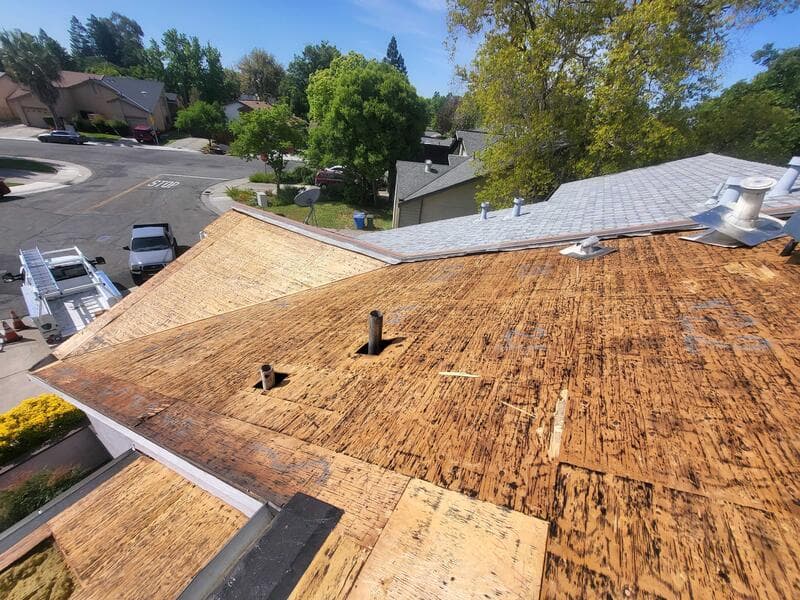
A roof is a system. Rafters or trusses carry the load down to the walls, the decking spans the gaps between them, and the roof surface sits on top. The structural integrity of the entire roof system depends on every part doing its job, and when one part weakens, the roof shows it as a visible dip. A sagging ridge line points to a problem in the main structure. A dip between rafters points to weak decking. A drooping eave often points to moisture damage or failing framing at the edge.
The right response depends on which form you have, how much roof sag is visible, and how fast it is changing. A stable, long-standing sag needs a diagnosis. A new or worsening sag needs attention quickly, because the structure may be carrying more load than it can handle.
6 Causes of Roof Sagging
These six causes account for most sagging roofs. More than one can be present at the same time, which is why the cause has to be confirmed before a repair is priced.
1. Water Damage and Rotted Decking
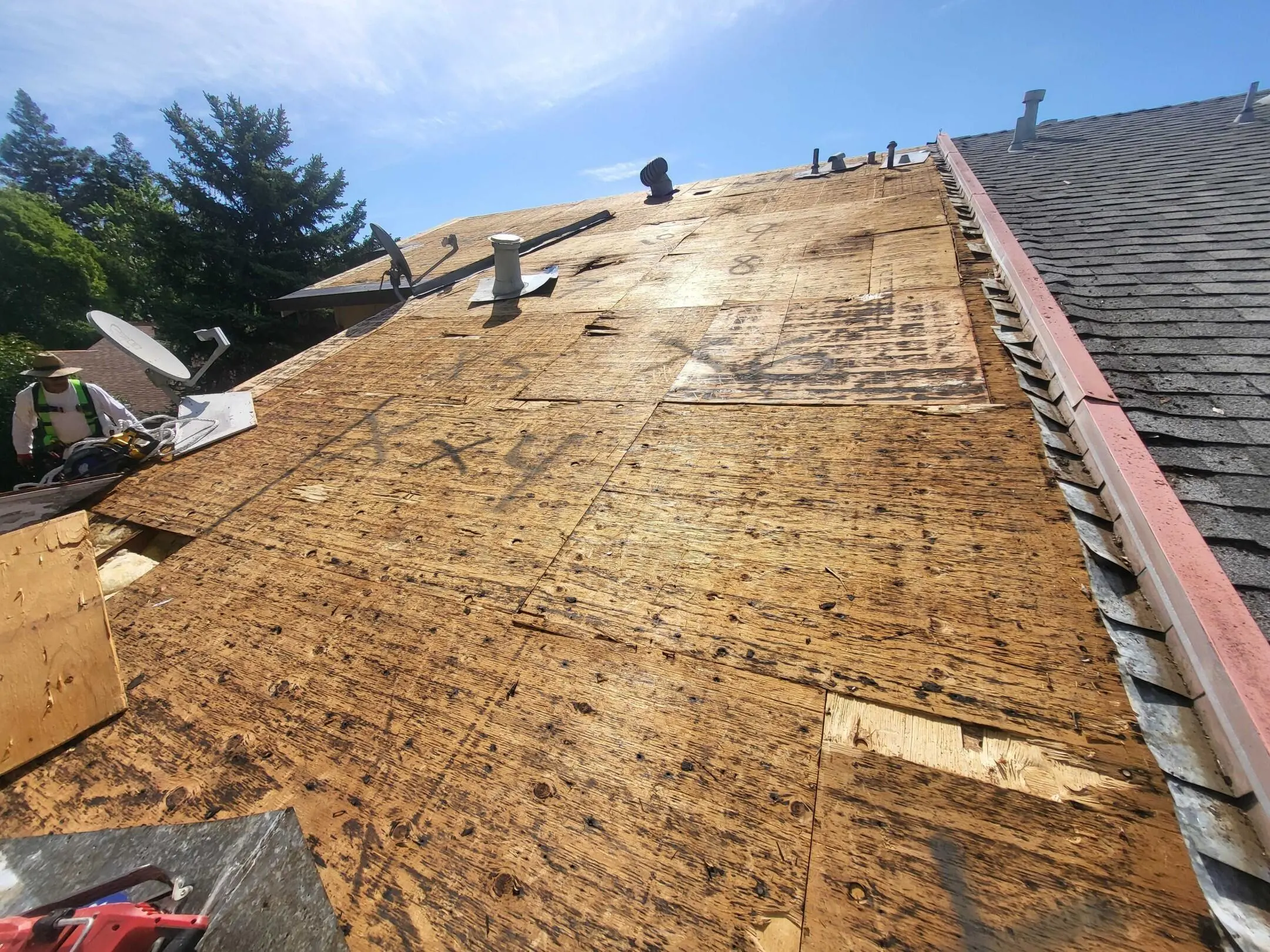
Roof leaks soak the plywood or OSB decking, and decking that stays wet loses stiffness and starts to rot. A leak that was patched but never fully dried can keep damaging the wood for years. Poor attic ventilation does similar damage from below, because trapped moisture condenses on the underside of the deck.
- Typical sign: A soft, spongy dip between rafters, often with ceiling stains below.
- Typical fix: Replace the damaged decking sections and correct the leak or ventilation problem that caused it.
2. Too Much Weight From Extra Roofing Layers
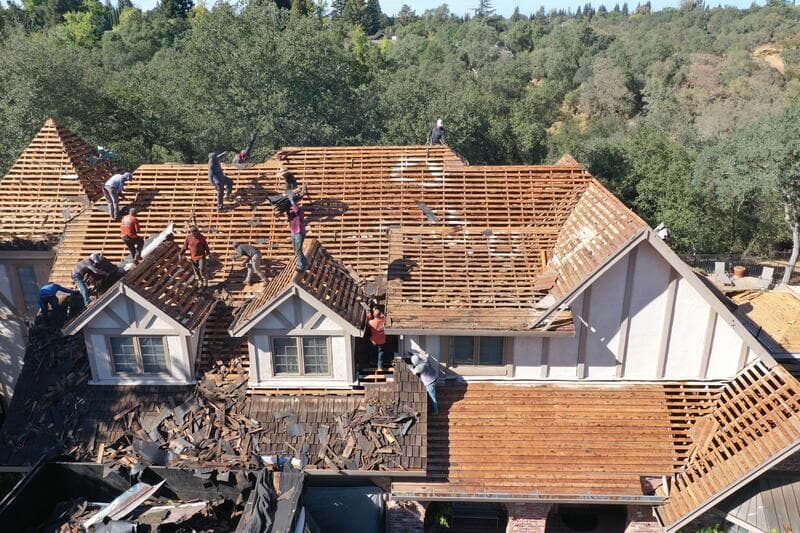
Each layer of roofing materials adds weight, and old roofs that were covered over instead of torn off can carry far more than they were designed for. According to a 2018 IRC residential re-roofing guide, a new roof covering cannot be installed over an existing roof that already has two or more layers of roof covering. California’s residential code is based on the IRC, and the limit exists because extra weight strains the structure. Heavy materials such as concrete tile on a frame designed for lighter shingles can have the same effect.
- Typical sign: An even sag across a large section of an older roof with multiple layers.
- Typical fix: Full tear-off to the deck, then a structural check before new material goes on.
3. Damaged Rafters or Trusses
Rafters and trusses can crack, rot, or be weakened by insects such as termites. Water that reaches the framing, or a leak that went unnoticed, can reduce their strength. Once a framing member loses capacity, the roof above it begins to dip, and in severe cases roof collapse becomes a risk.
- Typical sign: A sag along a line that follows a rafter, sometimes with visible cracking or staining in the attic.
- Typical fix: Reinforce or replace the member, often by attaching a new board alongside the damaged one, designed by a structural engineer.
4. Undersized or Altered Framing
Some roofs sag because the framing was never adequate. Rafters that were too small for the span, missing collar ties, or framing cut during a past remodel can all leave a roof carrying more load than it can handle. This type of sag often shows up gradually over many years.
- Typical sign: A sag in a house with a history of attic work, added dormers, or altered framing.
- Typical fix: Structural reinforcement designed by an engineer, since the original design is part of the problem.
5. Foundation Settlement or Wall Movement
If the walls move, the roof moves with them. Soils that swell when wet and shrink when dry can shift a foundation over the years, and the movement can translate into a sagging ridge or distorted roof plane. This cause is easy to miss, because the roof looks like the problem when the foundation is the source.
- Typical sign: A sagging roof along with cracks in walls, sticking doors or windows, or sloping floors.
- Typical fix: Address the foundation first, then repair or adjust the roof framing.
6. Heavy Snow, Debris, or Ponding Water
In El Dorado Hills and other foothill communities, occasional heavy snow, along with accumulated leaves and debris, can add load that an already weakened structure cannot handle. Water that pools on low spots adds weight and speeds up decay.
- Typical sign: A sag that appears or worsens after a storm or a wet season.
- Typical fix: Remove the load, find out why the structure could not carry it, and repair the weak point.
Warning Signs of a Sagging Roof
Many sagging roofs announce themselves long before they fail. A walk around the house, and a look into the attic, covers most of it.
- Dips or waves in the roof surface: Sight along the ridge and roof planes from across the street.
- Cracks in ceilings or walls: New cracks in drywall near the ceiling can mean the structure is shifting.
- Doors and windows that stick: Changes in how upstairs doors and windows close can indicate movement.
- Water stains or daylight: Stains on ceilings or light coming through the roof boards signal a leak above.
- Sagging fascia or soffits: Drooping at the eaves often accompanies a failing roof edge.
- Sounds: Creaking, popping, or cracking from the attic is a warning sign, especially after weather.
How to Check for a Sag Safely
You can learn a lot about a suspected sag without ever climbing a ladder, and you should not walk on a roof that might be structurally compromised. A weakened deck can give way under body weight, and the first person to find out should not be you. These checks keep you on the ground and in the attic with the roof framing in plain sight.
- Sight the roofline: Stand across the street and look along the ridge and the eaves. A straight line from end to end should stay straight, and a visible dip or wave is worth photographing.
- Use a string line: Stretch a string tight along the ridge from a ladder at the gable end, or compare the ridge to a straight reference. Gaps show where the ridge has dropped.
- Check from the attic: With a flashlight, look at the underside of the decking and the rafters. Dark staining, soft spots, cracks, or sagging insulation all point to a problem above.
- Look for pests: Fine sawdust or tunnels in the wood suggest insect damage.
- Photograph and date everything: Take photos from the same positions every few weeks so changes are easy to see.
- Stay off the roof: If the sag looks significant, do not walk on it. Let a professional assess the structure first.
It also helps to note the age of the roof and whether it was ever covered over rather than torn off, since both affect the likely cause. Bring that history, and the photos, to any evaluation.
When to Act
How fast you need to move depends on how quickly the roof is changing.
- Act immediately: A sudden sag, a new cracking sound, widening ceiling cracks, or a visibly dropping roofline after a storm. Stay out of the area under the sag, do not walk on the roof, and call a structural engineer or an emergency roofer.
- Act within weeks: A sag that is clearly visible but stable. Photograph it, mark crack ends with a dated pencil line, and schedule an evaluation.
- Monitor and plan: A very slight, long-standing dip that has not changed. It still deserves a professional opinion, but it may not need emergency action.
What Repair Looks Like
Repair follows the cause. Water-damaged decking is replaced as part of a roof replacement or a targeted repair, and a full roof replacement makes sense when the damage is widespread. Damaged or undersized framing needs structural reinforcement, which should be designed by a structural engineer and carried out by a licensed roofing contractor with a permit. Foundation issues are handled first, and the roof is corrected afterward. A contractor who quotes a repair without finding the cause is guessing.
Frequently Asked Questions About Roof Sagging
These are the questions El Dorado Hills homeowners ask most often when they notice a dip in the roof.
Can a sagging roof be fixed without replacing the whole roof?
Sometimes. A localized sag from damaged decking can be repaired by replacing the affected area. A sag caused by framing damage needs structural work, and a professional roofer will usually recommend a full tear-off for an old, multi-layer roof.
Is a sagging roof dangerous?
It can be. A stable, minor sag may not be urgent, but a sudden or worsening sag can mean the structure is overloaded. Treat any change as a reason to get it checked right away.
Does homeowners insurance cover a sagging roof?
Coverage depends on the cause. Sudden damage from a covered event may be eligible, while gradual deterioration, rot, and wear are typically excluded. Review your policy and document the damage with dated photos.
Get Your Sagging Roof Evaluated
A sagging roof is a diagnosis problem before it is a repair problem. Spartan Home Services evaluates the roof and decking, tells you honestly when the issue goes beyond roofing and needs a structural engineer, and offers emergency repairs when conditions call for it. Schedule a roof consultation and we will look at what is causing the sag before recommending a repair.