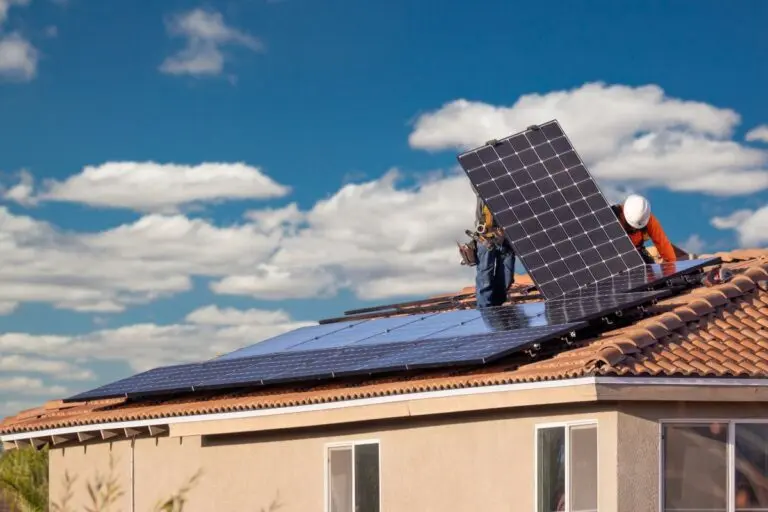


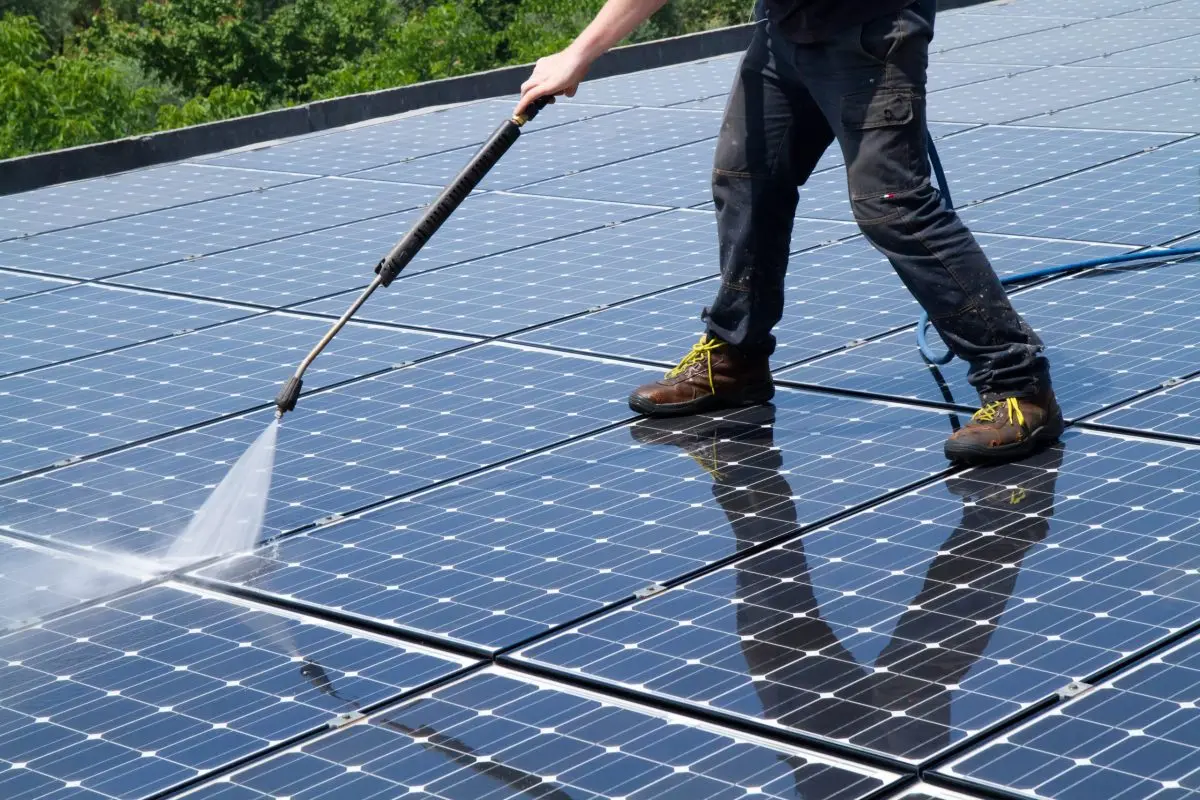
Most homeowners who invest in solar panels think about the installation, the financing, and the monthly savings, but not what happens to panel output over the years as dust, pollen, bird droppings, and debris accumulate on the surface. Solar panel cleaning is one of the most overlooked aspects of solar ownership, and it directly affects how much electricity your system generates and how long your investment holds its value. Understanding why cleaning matters and how often it should happen in Northern California’s specific climate helps solar homeowners protect their system and their payback timeline. If you want to understand the details that keep a solar installation performing over its full lifespan, that context is useful first.
This blog covers:
- Why solar panel cleaning matters for energy output and system longevity
- The 8 specific reasons regular cleaning is worth the investment
- How Northern California’s climate creates unique cleaning needs
- How often Sacramento Valley and Fairfield area homeowners should clean their panels
We’re proud to serve homeowners in Folsom, CA, and nearby communities with solar installation and maintenance services and more.
Why Cleaning Solar Panels Is Not Optional Maintenance
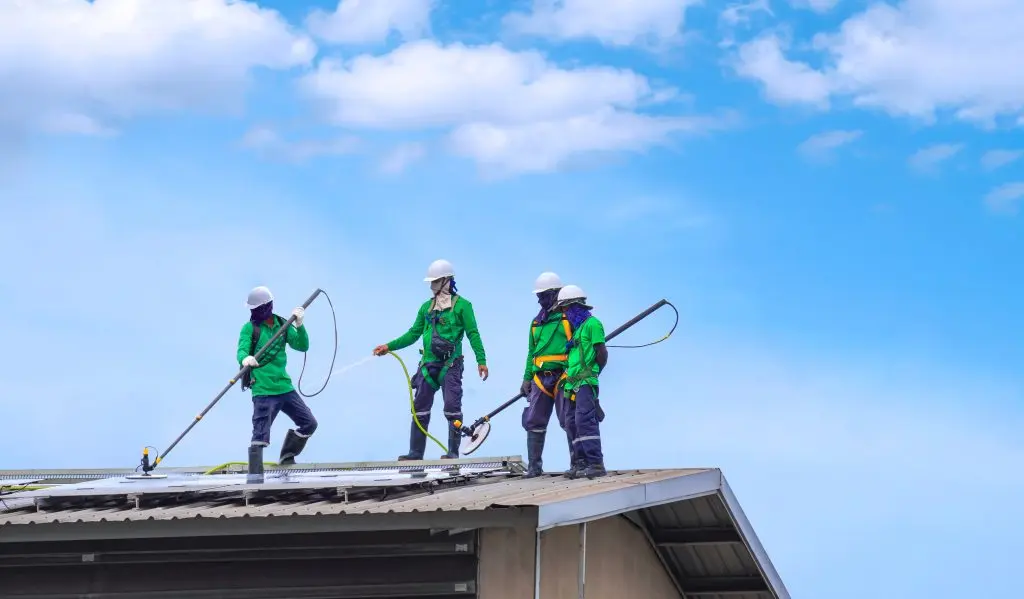
Solar panels work by converting sunlight into electricity, and anything that reduces the amount of sunlight reaching the photovoltaic cells reduces output directly. Dust, pollen, bird droppings, and accumulated debris do not need to completely coat a panel to affect its performance. According to verified solar maintenance data, dirty solar panels can be 15 to 25% less efficient than clean panels, a reduction that compounds over time and directly shortens the payback period on the original installation.
In the Sacramento Valley, the dry season from May through October creates the most significant accumulation window. Panels collect dust, agricultural particulate, and wildfire smoke residue for months without rain to rinse them. When the rainy season arrives, the first rains often deposit accumulated grime rather than cleaning it, leaving a residue that is harder to remove than dry dust. Proactive residential solar panel cleaning before and after the dry season is the most effective approach for maintaining optimal performance in Northern California. Cleaning solar panels on a scheduled basis protects electricity generation output and extends the effective service life of the system.
8 Reasons Solar Panel Cleaning Matters for Your Home
The eight reasons below address the specific consequences of skipping solar panel cleaning. Each one represents a real impact on system performance, financial return, or physical equipment condition.
1. Maximizing Energy Output
Dirty panels produce less electricity. The math is direct: a system generating 15 to 25% less output than it should means the homeowner is drawing more from the grid than their system was sized to offset. For a typical Northern California household with a 7 to 10 kilowatt system, a 20% output reduction translates to a meaningful difference in monthly utility savings that compounds across every month of the system’s 25-year life.
The impact varies by soiling type. Bird droppings and sap create dense localized shading on the module surface that disproportionately affects cell output due to the way photovoltaic cells are wired. Dust and pollen create more diffuse shading but accumulate faster. Both require regular removal using appropriate cleaning systems to maintain the output the system was designed to produce. For large solar installations, even small per-panel efficiency losses multiply significantly across the full array.
- Dust and pollen: Diffuse shading that accumulates continuously during the dry season, reducing output gradually.
- Bird droppings: Dense localized soiling that creates disproportionate output loss relative to its size due to cell wiring configuration.
- Wildfire smoke residue: Fine particulate that bonds to panel glass and requires wet cleaning to remove effectively.
2. Protecting Your Financial Return
The payback period on a solar installation depends on the system producing the energy output it was sized for. A system underperforming by 20% takes significantly longer to pay back than projected. For Northern California homeowners with financed installations, monthly loan payments are fixed while energy savings vary with output. A dirty system narrows the spread between what the homeowner pays for the system and what they save on electricity, extending the effective payback period beyond what was projected at signing.
- Projected vs. actual output: Installers size systems based on clean panel performance. Persistent soiling creates a permanent gap between projected and actual savings.
- Financing context: Fixed loan payments against reduced energy savings narrows the monthly net benefit of going solar.
3. Preventing Hot Spots and Long-Term Damage
When debris creates uneven shading across a panel, cells in the shaded areas can reverse their electrical role and begin absorbing rather than generating energy. This produces localized heating called a hot spot, which accelerates cell degradation in the affected area and can permanently reduce the panel’s output capacity. Severe hot spots can physically damage the panel and void manufacturer warranties.
Bird droppings are the most common cause of hot spots in residential installations because they create dense, localized shading that persists unless actively removed. A dropping that sits on a panel surface through a summer of Sacramento Valley heat cycles creates ideal hot spot conditions. Regular cleaning eliminates this failure mechanism before it has time to create permanent damage.
- Hot spot mechanism: Shaded cells reverse their electrical role, generating heat rather than electricity, accelerating degradation.
- Primary cause in Northern California: Bird droppings from regional bird populations are the most common hot spot trigger on residential installations.
4. Maintaining Warranty Compliance
Most solar panel manufacturers include maintenance requirements in their product warranty documentation. Failure to maintain panels in reasonable condition, which typically includes periodic cleaning, can be cited as a basis for warranty denial on performance claims. A homeowner whose panels are consistently underperforming due to soiling but who has never cleaned them may have a manufacturer warranty claim denied on maintenance grounds.
Reviewing the specific warranty documentation for your panel brand is the most reliable way to understand what maintenance is required. Most major manufacturers recommend cleaning at least once or twice per year, with more frequent cleaning specified for environments with heavy soiling exposure such as agricultural areas, wildfire smoke zones, or coastal salt environments.
- Warranty risk: Manufacturers can deny performance warranty claims when panels have not been maintained per documented requirements.
- Northern California exposure: Agricultural particulate, wildfire smoke, and oak pollen all qualify as heavy soiling environments where more frequent cleaning may be warranted.
5. Protecting the Inverter and System Electronics
Solar panels that consistently underperform due to soiling create irregular output patterns the inverter must compensate for. Persistent irregular output from soiling-related cell mismatch stresses inverter components over time and contributes to premature failure. Residential string inverter replacement runs $1,000 to $3,000 and is often not covered after the initial warranty period. Keeping panels clean reduces inverter variability and extends its service life.
- Inverter stress: Persistent irregular output from dirty panels increases the compensatory work the inverter performs, contributing to wear.
- Financial exposure: Residential string inverter replacement runs $1,000 to $3,000 and is often not covered by extended system warranties after the initial warranty period.
6. Accurate Performance Monitoring
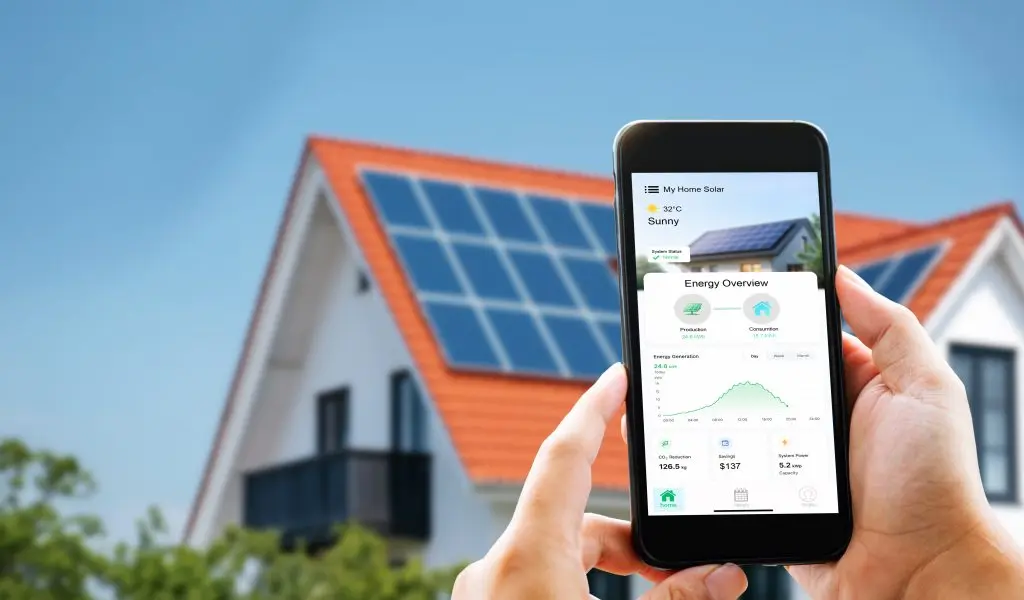
Solar monitoring systems track energy production in real time and flag underperformance relative to expected output. A system with consistently dirty panels cannot be monitored accurately. What appears to be a monitoring alert for a failing component may simply be dirty panels, or actual component failures can be masked by soiling that makes underperformance appear expected. Clean panels allow monitoring systems to accurately identify genuine equipment issues rather than soiling-related output loss.
- Diagnostic clarity: Clean panels allow monitoring systems to accurately flag genuine equipment failures rather than soiling-related underperformance.
- Proactive value: Homeowners who clean regularly establish a clean-panel output baseline that makes performance deviations immediately recognizable.
7. Supporting Your Home’s Resale Value
Solar panels installed on a home are a property improvement that transfers with the sale. A well-maintained system with documented cleaning history presents more credibly to buyers and appraisers than one with no maintenance record. A system that is visibly soiled or showing early damage from untreated hot spots presents a liability rather than an asset. Documented maintenance history supports the system’s value claim and the output figure buyers are being told to expect.
- Appraisal support: Documented maintenance history supports solar system value claims in real estate transactions.
- Buyer confidence: A clean, well-maintained system with verifiable output history is a stronger selling point than one with no maintenance record.
8. Extending Panel Lifespan
Solar panels are rated for 25 to 30 years under controlled conditions. Persistent soiling, untreated hot spots, and debris abrasion on panel glass all contribute to accelerated aging that shortens effective service life. A panel that has experienced repeated hot spot events degrades its output capacity in ways that are not reversible. The cost of periodic professional cleaning across a system’s life is a fraction of the output value preserved by keeping panels in serviceable condition.
- Rated vs. actual lifespan: Panels that are maintained properly reach their 25 to 30 year rated lifespan; neglected panels underperform and degrade earlier.
- Compounding effect: Small maintenance failures accumulate over decades into irreversible output degradation that no amount of future cleaning can restore.
How Often Should Sacramento Valley Homeowners Clean Solar Panels?
For most Northern California residential installations, twice yearly is the recommended minimum: once in late spring after pollen season and once in early fall before the rainy season. Homes near agricultural operations, in wildfire smoke corridors, or with significant bird activity may benefit from quarterly cleaning. Professional cleaning with deionized water and soft brush equipment is most effective for significant accumulation. Homeowner self-cleaning with a garden hose and soft brush works in light soiling conditions, but avoid high-pressure washing which can damage panel edges and void manufacturer warranties.
Frequently Asked Questions About Solar Panel Cleaning
These questions reflect what Northern California solar homeowners most consistently ask about cleaning frequency and methods.
Can I clean solar panels myself?
Yes, for routine maintenance in light soiling conditions. A garden hose and soft brush work well for clearing surface dust and light pollen from the module surface. Avoid soap or detergents that leave residue, and never clean during peak heat hours when thermal shock from cold water can stress the glass. For significant accumulation including bird dropping buildup or wildfire smoke residue, professional cleaning with deionized water produces better results.
Does rain clean solar panels effectively?
Light rain cleans some surface dust but does not remove bird droppings, pollen layers, or wildfire smoke residue. In the Sacramento Valley, the first rains frequently deposit accumulated grime rather than removing it. Rain is not a substitute for periodic cleaning in Northern California’s climate.
aHow much output do I lose from dirty panels?
Research consistently shows 15 to 25% output reduction from significant soiling. The financial impact depends on system size, utility rate, and how long the soiling has accumulated.
Spartan Handles Solar Installation and Maintenance
Spartan Home Services installs rooftop solar systems across the Sacramento and Fairfield service areas with a dedicated concierge on every project. Keeping that system performing correctly over its full lifespan starts with the installation quality and extends through ongoing maintenance. Get in touch with our team and we will walk you through what your system needs to stay at full output.