


Commercial roof coatings are one of the most cost-effective tools available to building owners and property managers for extending roof life, reducing energy costs, and deferring full replacement. A 10,000 square foot commercial flat roof typically costs $20,000 to $50,000 to coat versus $50,000 to $120,000 for full roof replacement, but only when the right coating is selected for the specific roof substrate, drainage condition, and climate. The wrong coating on the wrong roof produces early failure regardless of the application quality. Understanding which coating type addresses the specific failure mode on your roof is the starting point for any coating project. If you want to understand the full commercial roofing system before evaluating coatings, that context is useful first.
This blog covers:
- What commercial roof coatings do and when they make sense
- The five most common coating types and their best-fit applications
- How California’s Title 24 energy code affects coating selection for commercial properties
- How to compare coatings across cost, lifespan, and substrate compatibility
We’re proud to serve commercial property owners in Vallejo, CA, and nearby communities with commercial roofing and coating services and more.
What Commercial Roof Coatings Do and When They Work
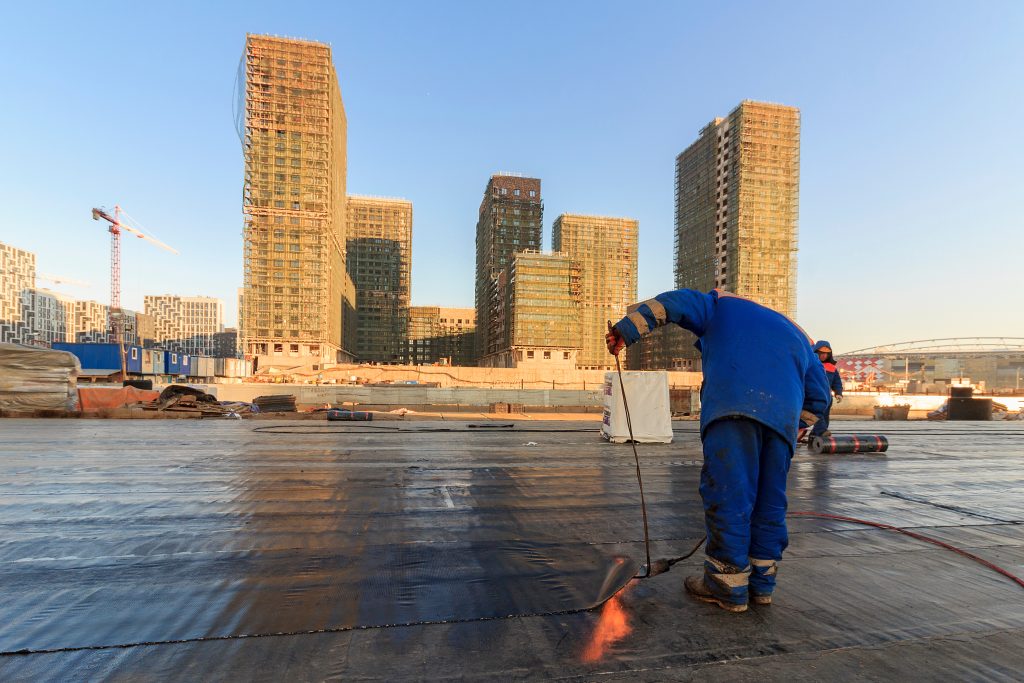
A commercial roof coating is a liquid-applied membrane that cures to a continuous, seamless film over an existing roof surface. When applied correctly at the specified dry film thickness, a coating stops minor leaks, bridges small cracks and seams, reflects solar radiation, and extends the effective service life of the underlying roof by five to twenty years depending on the chemistry and conditions. The coating is not a substitute for structural repair, failed flashing replacement, or chronic ponding water correction. Those issues must be addressed before any coating goes down.
Coatings work best when applied to a roof that is structurally sound, in reasonable condition, and before the end of the existing membrane’s service life. A coating applied to a roof already past its service window is a temporary patch, not a restoration. The right candidate for a coating project is a roof with years of useful life remaining that needs help with leak prevention, energy performance, or protection against UV degradation.
5 Commercial Roof Coating Types and When to Use Each
The five coating types below represent the most widely used options in the roofing industry for commercial flat and low-slope applications. Each has a specific failure mode it addresses best, a substrate range it adheres to reliably, and conditions under which it underperforms. Matching the chemistry to the roof’s primary problem is the most important decision in any coating project. A high quality roof coating applied to the right roof system at the correct thickness will outperform a premium product mismatched to the substrate or drainage condition.
1. Acrylic Roof Coatings
Acrylic coatings are water-based and made from acrylic polymer emulsions. They are the oldest and most widely used coating type in commercial roofing, favored for their cost-effectiveness, UV reflectivity, breathability, and ease of application. A quality white acrylic coating achieves 80 to 90% initial thermal reflectance, making it a strong option for buildings in high-UV markets like the Sacramento Valley where reducing cooling loads has a direct and measurable impact on operating costs.
The primary limitation of acrylic is its performance with standing water. Acrylic coatings absorb moisture under ponding conditions and can soften, lose adhesion, and delaminate in areas where water sits for extended periods. Most acrylic manufacturer warranties explicitly exclude ponded areas. Acrylic also requires specific weather conditions for application: temperatures above 50 degrees Fahrenheit and no rain in the forecast for at least 24 hours, which limits the application window more than silicone.
- Best for: Sloped or well-drained low-slope roofs in warm climates with good UV exposure and minimal ponding risk.
- Ideal substrates: Metal roofing, modified bitumen, built-up roofing, and single-ply membranes with confirmed good drainage.
- Typical service life: 5 to 10 years depending on application thickness, climate, and maintenance.
- Avoid when: The roof has chronic ponding water, or when temperatures during application regularly fall below 50 degrees Fahrenheit.
2. Silicone Roof Coatings
Silicone coatings are solvent-based or moisture-cure systems that cure to a highly flexible, water-repellent film. They are the preferred coating for flat and low-slope commercial roofs with ponding water conditions because silicone is hydrophobic. It repels water rather than absorbing it, and remains dimensionally stable submerged without softening or delaminating. Silicone also maintains UV stability over time better than acrylic, resisting the chalking and reflectance loss that acrylic systems experience as they age.
The practical limitation of silicone is recoatability. Neither acrylic nor polyurethane reliably adheres to cured silicone, making silicone over silicone the only practical recoat option once a roof has received a silicone coating. Building owners and property managers should plan the full lifecycle of the roof around that constraint before the first silicone coat goes down. Silicone is also slippery when wet, which creates foot traffic and safety considerations on roofs with regular maintenance access requirements.
- Best for: Flat and low-slope roofs with ponding water conditions, EPDM, TPO, metal, modified bitumen, and spray foam substrates.
- Typical service life: 15 to 25 years in high-UV and ponding environments, longer than acrylic in the same conditions.
- Avoid when: The roof has significant foot traffic, or when future recoating with non-silicone chemistry is anticipated.
- California consideration: White silicone products are available with CRRC-listed reflectance values that meet California’s Title 24 requirements for nonresidential low-slope roofs.
3. Polyurethane Roof Coatings
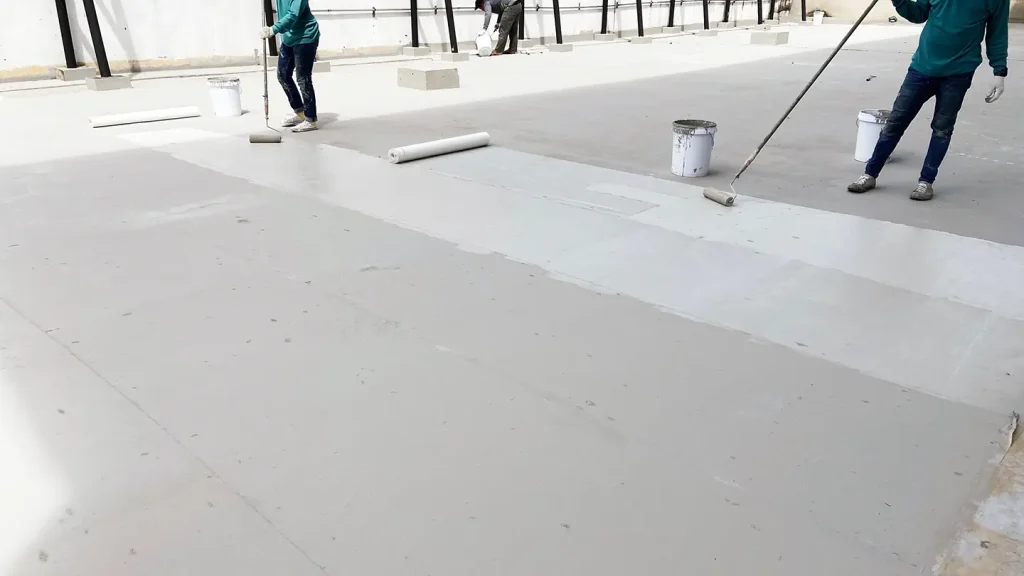
Polyurethane coatings are the toughest film of the three primary options in terms of abrasion resistance, tensile strength, and impact resistance. They are the preferred choice for commercial roofs with significant foot traffic, rooftop equipment access, or industrial applications where mechanical wear is a primary concern. Polyurethane achieves a tensile strength significantly higher than silicone or acrylic, making it appropriate for manufacturing facilities, warehouses, and buildings with active rooftop maintenance schedules.
Polyurethane is typically used as a two-component system: aromatic urethane coatings provide toughness and adhesion as a base coat, while an aliphatic polyurethane or silicone topcoat provides UV stability. Aromatic polyurethane alone degrades quickly under UV exposure and should not be used as a finished surface without a UV-protective topcoat. Cost runs higher than acrylic and typically higher than silicone as well, but for roofs where mechanical durability is the primary requirement, polyurethane is the correct chemistry.
- Best for: High-traffic commercial roofs, rooftop equipment areas, manufacturing and warehouse facilities where mechanical wear is a primary concern.
- Typical service life: 10 to 20 years with proper topcoat for UV protection.
- Avoid when: The roof has ponding water conditions without adequate drainage improvement, or when budget does not allow for the two-component system with proper UV topcoat.
4. Butyl Rubber Coatings
Butyl coatings are solvent-based systems with exceptional elongation and tensile strength, making them resistant to cracking even under significant thermal movement. Butyl serves as an excellent vapor barrier and is recommended for cold storage applications and spray polyurethane foam roofing where moisture vapor control is a primary performance requirement. The elongation properties make butyl highly durable on roofs with substrates that experience significant thermal cycling.
The primary limitation of butyl is its high volatile organic compound content, which makes it incompatible with low-VOC regulations in states including California. Building owners in California should confirm local air quality district requirements before specifying butyl coatings, as low-VOC requirements in most California jurisdictions prohibit standard butyl formulations.
- Best for: Cold storage facilities, SPF roofing applications, substrates with high thermal movement.
- Avoid when: The project is located in California or any jurisdiction with low-VOC requirements. Standard butyl formulations do not comply.
5. Elastomeric Coating Systems
Elastomeric is a broader category that encompasses coatings formulated to stretch and recover with building movement and thermal cycling. In common usage, the term often refers to acrylic-based systems, but silicone, polyurethane, and butyl coatings are all technically elastomeric in that they share the stretch-and-recover property. What distinguishes elastomeric systems in practice is their ability to bridge minor surface cracks and seams as the substrate moves, creating a seamless protective membrane over irregular surfaces.
For commercial building owners evaluating coatings, the practical distinction is that elastomeric systems, particularly acrylic-based formulations, are the appropriate choice for substrates that experience thermal movement and where ponding water is not a concern. They are breathable, allowing moisture vapor from inside the building to escape rather than trapping it beneath the coating, which helps prevent blistering on substrates with residual moisture.
- Best for: Metal roofing and built-up roofing substrates with thermal movement and good drainage, moderate climates, cost-sensitive projects.
- Typical service life: 5 to 15 years depending on specific chemistry, application thickness, and maintenance.
California Title 24 and Coating Selection
California’s Title 24 energy code (2025 cycle, effective January 1, 2026) sets specific performance requirements for nonresidential low-slope roof surfaces. According to verified coating compliance data, California Title 24 requires a minimum aged solar reflectance of 0.63, thermal emittance of 0.75, or SRI of 75 for nonresidential low-slope roofs. White acrylic and white silicone both have CRRC-listed products that meet these thresholds. Commercial building owners in the Sacramento and Fairfield areas should confirm that any coating specified for their roof is CRRC-listed and meets the applicable reflectance and emittance values before work begins.
Coating vs. Replacement: How to Decide

A coating project makes financial and practical sense when the existing roof substrate is structurally sound, has no widespread decking damage, and has meaningful service life remaining. The cost comparison typically favors coating when the roof system qualifies: $20,000 to $50,000 for coating versus $50,000 to $120,000 for full roof replacement on a 10,000 square foot roof. A thorough inspection before coating is the only way to confirm the roof qualifies, since coating over hidden moisture, structural damage, or failed flashings produces early failure regardless of coating quality.
Frequently Asked Questions About Commercial Roof Coatings
These questions reflect what commercial building owners and property managers in Northern California most commonly ask when evaluating a coating project.
Can any commercial roof be coated?
Not every roof qualifies. The substrate must be structurally sound and free of widespread moisture intrusion or decking damage. Roofs with active leaks, failed flashings, or structural issues must have those problems addressed before coating. A professional inspection is the correct starting point for any coating evaluation.
How long does a commercial roof coating last?
Lifespan varies significantly by coating chemistry and application thickness. Acrylic systems typically last 5 to 10 years. Silicone systems typically last 15 to 25 years. Polyurethane systems with proper UV topcoat run 10 to 20 years. Warranty is directly tied to application thickness. A thicker application unlocks longer warranty coverage with most manufacturers.
Does a roof coating qualify as a cool roof under California Title 24?
Yes, if the coating is CRRC-listed and meets the minimum reflectance and emittance thresholds. White acrylic and white silicone both have qualifying products. Confirm the specific product’s CRRC listing before specification, as not all products within a coating category meet the threshold.
Can I coat over an existing coating?
Depends on the existing chemistry. Silicone cannot be reliably recoated with acrylic or polyurethane. Acrylic can typically be recoated with acrylic after proper cleaning and surface prep. A coating manufacturer’s technical data sheet will specify compatible recoat chemistries for the product in question.
Spartan Home Services Handles Commercial Roofing in Northern California
Selecting the right commercial roof coating requires matching the coating chemistry to the specific substrate, drainage condition, traffic level, and energy code requirements of the building. Spartan Home Services serves commercial property owners across the Sacramento and Fairfield service areas with roofing inspection, coating application, and full replacement when the roof no longer qualifies for a coating solution. Contact our team today, and we will assess your roof and recommend the right approach before any work is proposed.
Recent Articles Posts

Commercial Roof Inspection: 8 Steps Crews Follow
A commercial roof inspection is not a casual walk across a flat roof with a flashlight. It is a structured process designed to document…

What Is TPO Roofing? 6 Reasons It Dominates Flat Roofs
If you own or manage a building with a flat or low-slope roof, what is tpo roofing is a question worth understanding before your…

Make Your Home Exterior Spartan Strong!
Strong homes start with a team that does the job right.