


Most homeowners think about gutter downspouts only when something has already gone wrong. By that point, water has been going somewhere it shouldn’t for an entire rainy season, and the damage shows up in the foundation, fascia, and sometimes interior walls. Downspouts determine where water ends up after it leaves the roof — when they fail, clog, or were installed incorrectly, the consequences are expensive and predictable. If you’re due for a roofing evaluation and want to understand how a complete roofing system should be assessed, gutters and downspouts are part of that conversation.
This blog covers:
- What gutter downspouts do and why they matter
- The eight most damaging downspout problems
- What each problem does to a home over time
- How to identify issues before they compound
- What proper downspout installation and maintenance looks like
We’re proud to serve homeowners in El Dorado Hills, CA, and nearby communities with residential roofing and gutter services and more.
Why Downspouts Matter More Than Most Homeowners Realize
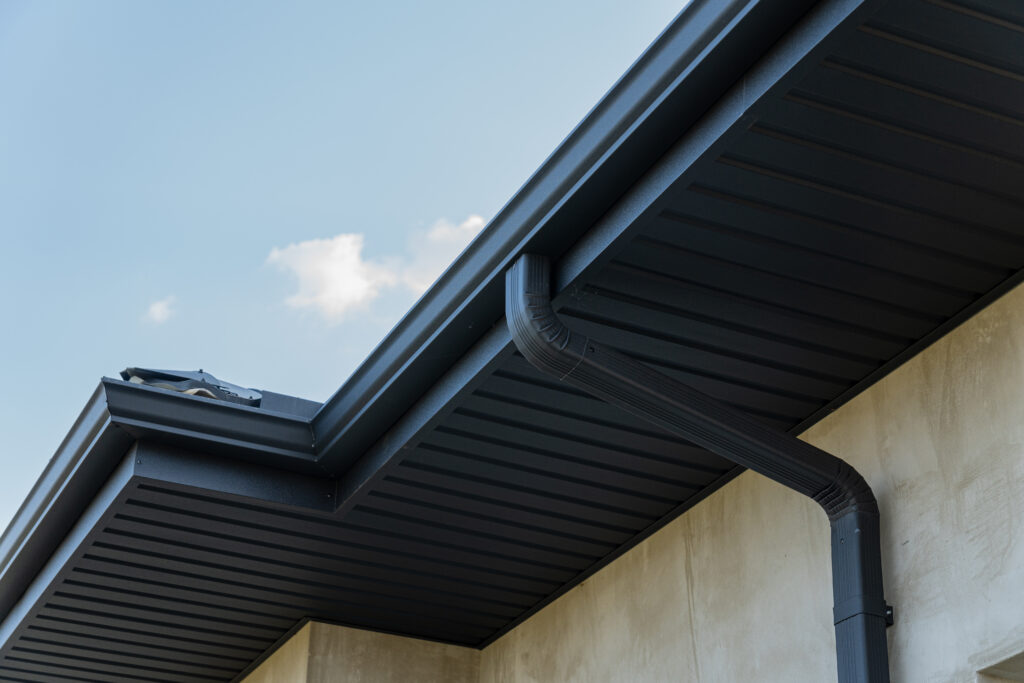
A gutter system is only as effective as its weakest discharge point. Gutters collect water from the roof, but downspouts determine where it goes. A properly functioning downspout carries water from the gutter to the ground and discharges it at least four to six feet from the foundation. When that breaks down, hundreds of gallons per storm end up concentrated near the foundation walls.
According to the National Association of Realtors, 5% of homeowners who have had foundation repairs paid more than $10,000 for the work, and another 13% paid between $5,001 and $10,000. Most trace back to water management failures that started at the gutter line. Knowing what goes wrong before the rainy season begins is one of the most cost-effective habits a homeowner can develop.
8 Gutter Downspout Problems That Cause Serious Damage
The problems below are the most common failures roofing and gutter professionals encounter on routine inspections, and most are invisible until damage has compounded over multiple seasons.
1. Clogged Downspouts
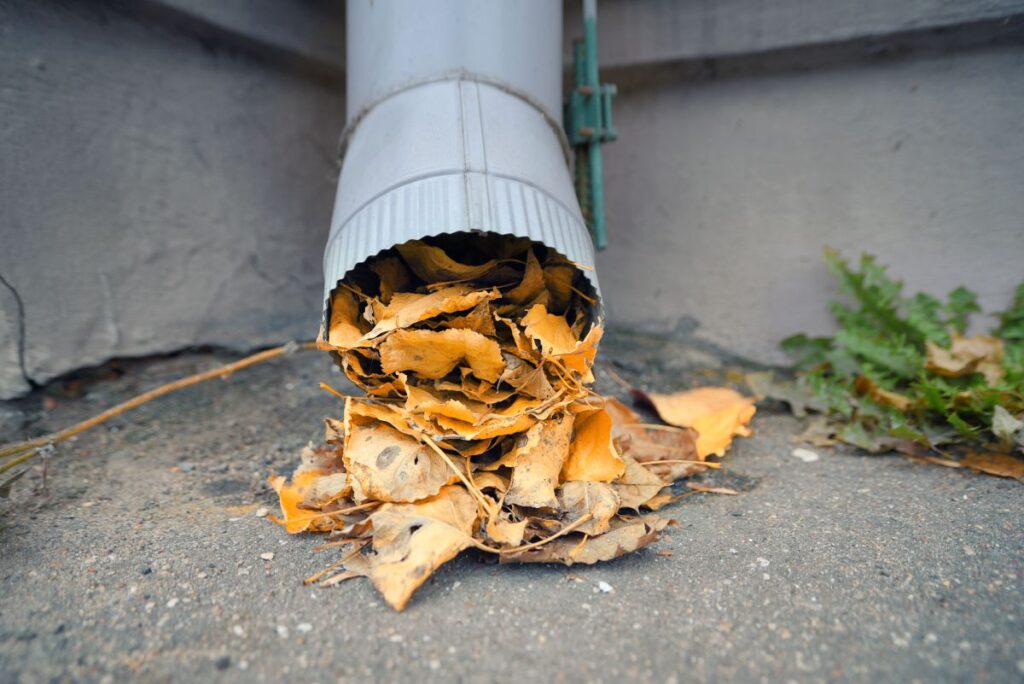
A downspout clog is the most common failure mode and the one homeowners most often overlook. When a downspout is blocked, water backs up into the gutter, overflows at the lowest point, and falls directly against the fascia, siding, and foundation below. In Northern California, where the rainy season delivers concentrated precipitation after months of dry weather, a single clogged downspout can send significant water volume against the same foundation section repeatedly throughout the season. Installing a debris filter at the downspout inlet is one of the most effective preventive measures available — universal debris filters fit any downspout style, and solid lid versions keep grass clippings and fine debris out while still allowing water to pass through freely.
- Flush test: Running a garden hose into the downspout confirms whether water flows freely or backs up.
- Debris sources: Leaves, twigs, and roof granules are the primary culprits, with granule loss increasing as shingles age.
- Maintenance schedule: Flush downspouts at least twice per year — late fall and early spring.
2. Discharging Too Close to the Foundation
A downspout that terminates at or near the foundation wall is nearly as damaging as no downspout at all. The standard is four to six feet of clearance, with some situations requiring ten feet or more. Many homes have short downspouts that discharge immediately at the base of the wall, saturating the soil around the foundation with every storm.
- Extensions: Plastic or metal downspout extensions are inexpensive and immediately redirect water further from the foundation.
- Underground drainage: Buried PVC pipe carries discharge to a dry well or storm drain for situations where surface extensions aren’t sufficient.
- Splash blocks: Concrete or plastic channels slow water and direct it away without significant excavation.
3. Disconnected or Separated Sections
Downspout seams can separate over time from temperature cycling, physical impact, or improper installation. A disconnected seam releases water against the exterior wall at the point of failure rather than carrying it to the discharge point, and the damage is often hidden behind shrubs until rot or staining becomes visible.
- Annual seam check: Every connection should be inspected annually for gaps, especially near the ground.
- Repair vs. replace: Sections corroded at the connection point should be replaced rather than resealed repeatedly.
- Strap spacing: Downspout straps should be installed every three feet and checked for looseness that allows movement and seam stress.
4. Undersized Downspouts
A downspout too small for the volume it needs to handle will overflow during heavy rain regardless of how clear it is. Sizing depends on the roof’s surface area and local rainfall intensity. Aluminum is the most popular building material for downspouts due to its rust resistance and affordability, though galvanized steel and sheet metal options are also available and appropriate in certain applications. The standard residential profile is 2-by-3-inch rectangular, commonly paired with K-Style gutters — plain square downspouts that run horizontally at the base to direct water away. Round downspouts are more efficient at moving water than rectangular ones of the same nominal size, making them worth considering on homes with high roof surface area or steep pitch.
- Overflow pattern: Water spilling over the gutter front during heavy rain rather than from a specific point often indicates undersizing rather than a clog.
- Spacing rule: One downspout per 20 to 40 linear feet of gutter is the general guideline, adjusted for roof pitch and local rainfall.
- Addition vs. upsizing: Adding a second downspout to an oversized gutter run is often more effective than replacing the existing one with a larger profile.
5. Improper Slope Toward Downspouts
Gutters need approximately one-quarter inch of drop per ten feet of run toward the downspout. When pitch is incorrect, water pools in low sections rather than flowing to discharge, adding weight that accelerates sagging and freezes during cold snaps in foothill communities.
- Standing water indicator: Water visible in gutters more than 48 hours after rain indicates insufficient slope.
- Re-pitching: Adjusting gutter hangers to correct slope extends gutter lifespan and restores drainage.
- Fascia condition: Gutters improperly pitched for years often reveal rotted fascia when removed for re-hanging.
6. Leaking Seams and Joints

Water escaping through downspout seams runs down the exterior wall, stains siding, and promotes mold growth in wall cavities. The leak is invisible during dry weather and only apparent during rain, which is exactly when most homeowners aren’t looking.
- Visual indicator: Vertical staining on siding beside a downspout reliably signals a seam leak.
- Repair: Interior joints sealed with exterior-rated caulk stop most minor leaks if applied to a clean, dry surface.
- Replacement threshold: Downspouts with multiple active leak points are better replaced than repeatedly patched.
7. Directing Water Back Toward the Home
Some downspout configurations carry water back toward the foundation rather than away from it. This happens when elbows are installed incorrectly, when grade slopes toward the foundation, or when a short extension terminates on a surface that channels runoff back.
- Grade requirement: Soil should slope away from the foundation at a minimum of six inches over the first ten feet.
- Elbow direction: The final elbow and extension should direct water away from the home given the surrounding grade.
- Splash block placement: Splash blocks should direct water away from the foundation, not parallel to it.
8. Physical Damage From Impact or Debris
Downspouts on the perimeter of a home are exposed to yard equipment, falling branches, and ladder contact during maintenance. Dents, kinks, and crushed sections restrict flow and redirect discharge against the exterior wall. In El Dorado Hills and communities with mature trees nearby, falling branches during wind events are a common cause of downspout damage that goes unnoticed until the following rainy season. Homes with galvanized steel or dark bronze downspouts should note that these materials, while durable, can dent from impact just as readily as aluminum and should be inspected on the same schedule.
- Post-storm check: Walking the perimeter after significant wind events and inspecting downspouts for visible damage is one of the most effective preventive habits a homeowner can build.
- Kink restriction: A crushed section reduces effective diameter and backs water up during high-flow periods.
- Replacement over repair: Sections with significant deformation should be replaced, as reshaped metal retains stress points that fail again at lower loads.
What Proper Downspout Installation Looks Like
A properly installed downspout system discharges water at least four to six feet from the foundation, uses correctly sized components matched to the roof area, has sealed seams throughout, and terminates on a surface that directs water away from the home. The rainy season in Northern California is concentrated and predictable — failures missed before October cause damage from November through February before anyone investigates. An annual inspection before the rains begin is the single most effective step a homeowner can take.
Frequently Asked Questions About Gutter Downspouts
Homeowners with questions about downspout function and maintenance tend to ask the same things regardless of home age or location. The answers below address the most practical ones before problems have a chance to compound.
How far from the foundation should downspouts discharge?
Four to six feet at minimum, with some situations requiring ten or more feet. Underground drainage systems that carry water to a dry well or storm drain are the most reliable solution when surface extensions aren’t sufficient.
How often should downspouts be cleaned?
Twice per year at minimum: late fall after leaves drop and early spring before rainy season. Homes under heavy tree cover may need quarterly flushing. A garden hose run from the top of the downspout is the simplest way to verify clear flow.
What’s the difference between a clogged gutter and a clogged downspout?
A clogged gutter fills with debris and overflows at the lowest point of the run. A clogged downspout causes water to back up from the discharge point and overflow wherever the gutter is lowest. Running a hose into the downspout inlet while watching the outlet confirms which issue is present.
Can I add downspouts to an existing gutter system?
Yes, without replacing the entire system. One downspout per 20 to 40 feet of gutter run is the standard starting point, adjusted for roof area and local rainfall.
Spartan Home Services Protects What’s Above and Below the Roofline
A roof that sheds water correctly is only the first part of keeping a home dry. The gutter system and downspouts that carry water away complete the chain, and a failure anywhere creates damage long after the storm is over. Spartan Home Services handles roofing and exterior work across the Sacramento and Fairfield service areas with the same standard on every project. When you’re ready for an honest look, reach out to our team and we’ll tell you what we find before we tell you what it costs.
Recent Articles Posts

Best Gutter Guards of 2026: 6 Types Ranked
If you have trees near your home, gutter guards are one of the more practical home maintenance investments available. The question is not whether…
9 Warning Signs You Need New Gutters on Your Home
Gutters are one of the most overlooked systems on a home right up until they fail. Most homeowners never think about them when they…

Make Your Home Exterior Spartan Strong!
Strong homes start with a team that does the job right.